

I've been playing video games since Pong first flickered onto our TV screens. That's a long history to draw from, but out of it all, it was a handful of specific games through the years which shaped the idea for Habitat.

DOOM was the first 3D game I ever played, and it's the first game that made me physically jump out of my chair — an imp came around a corner I wasn't expecting, and that was it. I was hooked. From that point on, first-person shooters became my favorite genre.
What DOOM taught me, and what I still want Habitat to carry forward, is simplicity. Easy mechanics, immediate understanding of what to do, and a game you can pick up for ten minutes or sink into for hours depending on how much time you actually have. Nothing about DOOM demanded you learn a complicated system before you could enjoy it. That's a value I want Habitat to hold onto completely.

Games like Half-Life and the original System Shock pushed the FPS genre forward in real ways, but it was System Shock 2 that showed me what the genre could actually become. Two things from SS2 shaped Habitat directly.
First, the storytelling. SS2 told its story through found recordings scattered across the ship — you'd stumble on a log, listen, and piece together what happened to this place and these people without a single cutscene forcing it on you. That's exactly the kind of storytelling I want in Habitat.
Second, the pacing. SS2 demanded caution in a way DOOM never did. You couldn't just run-and-gun through everything; you had to move carefully, aware that being seen by a security camera or turning the wrong corner could get you killed. That tension — moving carefully because the world demands it, not because a game mechanic forces it — is something I want Habitat to earn honestly.
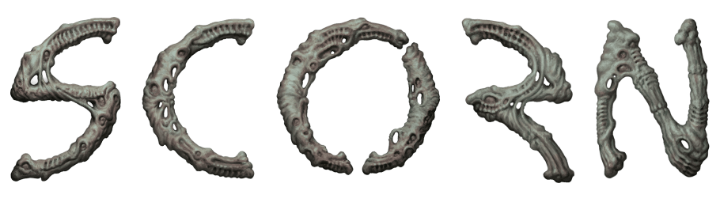
I followed Scorn's development for years before it ever released, and it's genuinely the game that pushed me toward wanting to build something myself. The version I’d first learned about promised a real blend of horror, investigation, and DOOM-like combat — a full story alongside real stakes and real teeth. What was actually released was quite a bit different — half the story got cut, and so did the combat, leaving a slower, more avoidant, purely atmospheric experience. Much of the gameplay became puzzle mechanics instead.
I still enjoyed what Scorn became. The graphics were gorgeous and the environments intriguing. But I couldn't stop thinking about the game I'd originally been longing for — something with that same commitment to environmental storytelling and unsettling atmosphere, but with real combat and a complete story intact. Eventually I stopped wishing someone else would make that game and decided to build it myself, with my own story, my own world, my own rules.
WHAT THIS ALL ADDS UP TO
Habitat draws its pacing and simplicity from DOOM, its environmental and recorded storytelling from System Shock 2, and its sense of atmosphere and unfulfilled potential from Scorn. Visual storytelling is the backbone of the whole project — what the environment shows you, what you find on a body, what a room's design tells you without a word of dialogue. Combined with text logs building the narrative the way SS2's audio logs did, that's the story-telling engine driving everything else in the game.
Habitat is a pet project. I’m creating this out of love for the genre, love for the game, and for the love of storytelling.